
"coffee plant growth"
8000 article(s) found

Coffee planting techniques conditions for planting coffee trees coffee beans are planted
Coffee belt: coffee can not be grown in any environment, because it is originally a plant growing in a tropical rain forest, and in phylogeny, it forms the habit of calm wind, cool, shaded or semi-shaded and humid environment. We call the strips on both sides of the equator between latitudes 25 degrees south and north suitable for the growth of coffee trees as coffee belts. Temperature: the requirements for temperature vary with the species of cultivation

The growth environment of high-quality coffee beans requires the difference between high-altitude robusta and Arabica coffee beans.
Professional coffee knowledge exchange more coffee bean information please follow the coffee workshop (Wechat official account cafe_style) front street-brief introduction to coffee growing conditions in botany, coffee is a member of the Rubiaceae, mainly Arabica and Robusta species, fine coffee to Arabica tin card, bourbon,

Anatomical map of the growth environment of coffee beans-how to distinguish between good and bad coffee beans
Anatomical map of the structure and growth environment of coffee beans-how to distinguish between good and bad coffee beans should be planted with seeds with endocarp. The raw coffee beans we usually come into contact with have been removed from the endocarp, so they cannot be planted. The endocarp (sheepskin or paper skin) refers to the tea-brown hard skin that surrounds the coffee seeds, and the coffee beans with that skin are called shelled beans (sheepskin paper beans).

Cultivation techniques and Biological habits of Coffee Tree
2. Biological habits (1) Botanical characteristics (2) growth and flowering habits (3) requirements for environmental conditions (1) Botanical characteristics 1. Root coffee root is a conic root system, its morphology, distribution and depth vary with agro-technical measures, soil conditions and varieties. In the case of a political party, there is a thick and short main root and many developed lateral roots. According to the observation in Hainan Island
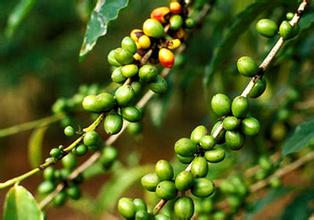
Introduction to the characteristic flavor of four forms of Ethiopian coffee beans grown and produced in Ethiopia coffee
Growth and production patterns: there are four growth production patterns in Ethiopia, and 95% of coffee is produced from these types or systems. 1. Forest grows in southern and southwestern Ethiopia, mostly wild or under natural forests. It provides natural shade for coffee trees, but the resistance is slightly weak. This production system accounts for about

How long can coffee trees live at most? the natural drying growth cycle of coffee beans.
How long can coffee trees live? the natural drying growth cycle of coffee beans the western and southern parts of Yunnan Province are located between 15 north latitude and the Tropic of Cancer, most areas are 1000-2000 meters above sea level, and the topography is dominated by mountains and slopes. Here, with fertile land, sufficient sunshine, abundant rainfall and large temperature difference between day and night, the unique natural conditions have formed the particularity of Yunnan small seed coffee taste.

Morphological characteristics and growth Environment of Coffee trees
Coffee is a perennial evergreen shrub or small tree of Rubiaceae. It is a horticultural perennial cash crop with the characteristics of fast growth, high yield, high value and wide market. Wild coffee trees can grow to a height of 5 to 10 meters, but coffee trees planted on the manor are often cut to less than 2 meters in order to increase their fruit and facilitate harvesting. The opposite leaves of coffee trees are long oval.

Planting conditions of coffee trees what kind of environment is suitable for coffee trees to grow in?
However, not all the land located in this area can produce good coffee trees. The ideal planting conditions of coffee trees are as follows: the temperature is between 15 ℃ and 25 ℃, and the annual rainfall must reach 1500 mm to 2000 mm. At the same time, the rainfall time should be in line with the flowering cycle of coffee trees. Of course, in addition to the coordination of seasons and rainfall, there should be fat work.

Coffee theory study: coffee plant classification, cultivation and processing
Many people are familiar with coffee powder, but coffee powder is formed after coffee beans are ground. The coffee beans that ordinary customers get are fried (roasted) coffee beans, while coffee beans that have not been roasted are green coffee beans. If you dig deeper, coffee beans come from coffee berries on coffee trees, which are the seeds of coffee trees. So to understand coffee beans, first you have to understand coffee.

The growth habits of coffee the distribution of coffee the three main types of coffee
Coffee trees grow in national farms in tropical or subtropical regions known as coffee belts centered at the equator and between latitudes of 25 degrees south and north. At present, coffee is produced in more than 60 countries, widely distributed in South America, Central America, the West Indies, Asia, Africa, Arabia, the South Pacific and Oceania. In terms of output, Brazil, which accounts for the first place in the world, accounts for about 30%; the second

What conditions do coffee trees need to meet to grow well? How to plant coffee trees?
Professional coffee knowledge exchange more coffee bean information please follow the coffee workshop (Wechat official account cafe_style) what conditions do coffee trees need to meet to grow well? How to plant coffee trees? The development of rainfall coffee needs sufficient moisture, the annual rainfall should be at least 1000 mm, and the maximum should not exceed 3000 mm. The rainfall should not be excessive or moderate, if the sauce is too much for a while.

Planting skills of herbaceous coffee trees
First, planting time: April 15-25 period. Second, planting location: plain, hillside, wasteland, front and back house, forest and fruit tree seedlings can be planted, but should not be planted in tall trees or other unventilated places. Third, herbal coffee does not like flood and fertilizer, conditional planting can use farm manure, during the growth period, it is best to irrigate 1-2 water during the growth period, absolutely do not allow the use of all kinds of chemical fertilizers and

What are the effects of high altitude on the growth of coffee? The effects of altitude on flavor are
Professional coffee knowledge exchange more information about coffee beans Please follow the coffee workshop (Wechat official account cafe_style) what is elevation refers to the vertical distance above sea level at a certain point on the ground. The study found that if the coffee beans have the same genes, the coffee beans grown in high altitude areas have better flavor. Coffee beans at high altitudes are harder because they are rich in nutrients and grow

Fine Coffee basic knowledge of Coffee Coffee growth process
1. Seed selection, seedling planting, shaping, pruning, soil management, fertilization, pest control, flowering and fruit picking. 2. Picking can be divided into two ways: manual picking and mechanical picking. Manual picking is divided into two ways: daylighting and selective picking. High quality coffee beans can be obtained by picking.
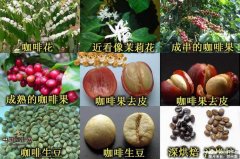
How do coffee beans grow during the coffee growth process?
1. Seed selection, seedling planting, shaping, pruning, soil management, fertilization, pest control, flowering and fruit picking. 2. Picking can be divided into two ways: manual picking and mechanical picking. Manual picking is divided into two ways: daylighting and selective picking. High quality coffee beans can be obtained by picking.

Basic knowledge of fine coffee in the process of coffee growth
1. Seed selection, seedling planting, shaping, pruning, soil management, fertilization, pest control, flowering and fruit picking. 2. Picking can be divided into two ways: manual picking and mechanical picking. Manual picking is divided into two ways: daylighting and selective picking. High quality coffee beans can be obtained by picking.
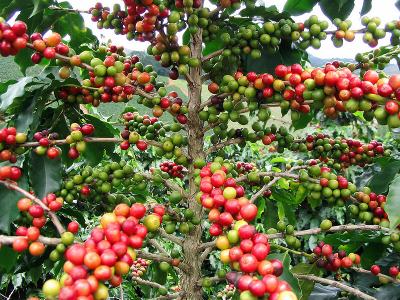
Fine coffee beans: 4 forms of Ethiopian coffee growing and producing
Growth and production patterns: There are four growth and production patterns in Ethiopia, from which 95% of coffee is produced. 1. Forest In Ethiopia's coffee-producing areas in the south and south-west, most of them are wild or planted under natural forests, which provide natural shade for coffee trees, but the resistance is slightly weak. This production system accounts for about

The basic knowledge of Coffee planting conditions
Coffee belt: coffee can not be grown in any environment, because it is originally a plant growing in a tropical rain forest, and in phylogeny, it forms the habit of requiring calm wind, cool, shaded or semi-shaded and humid environment. Therefore, coffee has strict requirements on planting conditions. We call the strips on both sides of the equator, between latitudes 25 degrees south and north, suitable for coffee growth as coffee belts. 1 、

Planting knowledge of Coffee trees guided by cultivation techniques of small Coffee
Small-grain coffee is a shrub of Rubiaceae, which is suitable for planting in areas with an annual average temperature of 19 ℃ ~ 21 ℃ and an altitude of 800-1400m. It has the advantages of fast plant growth, early fruit and high yield. The land preparation should choose the contour platform with deep soil layer, loose and fertile soil, clean wind, sufficient light and shade trees, annual rainfall of 700 to 1600 mm, slope of less than 30 degrees, and row spacing of 2 to 3 meters.

A brief introduction to the Market Price of Burundian Rocasta Coffee Bean varieties with almond flavor
[Bulongdi Champion processing Plant] is located in the Maerdadi Peak of the Panjia processing Plant in Cabuye District, Cajun Province, with a very high altitude, even more than 2000 meters in the mountainous area. the soil is fertile and gravelly, which is very suitable for coffee growth. it is recognized as the best coffee processing plant in Bulongdi. Bean parameters: country: Burundi growth: 1750 m production area: Kayanza Kabuye